Day 3
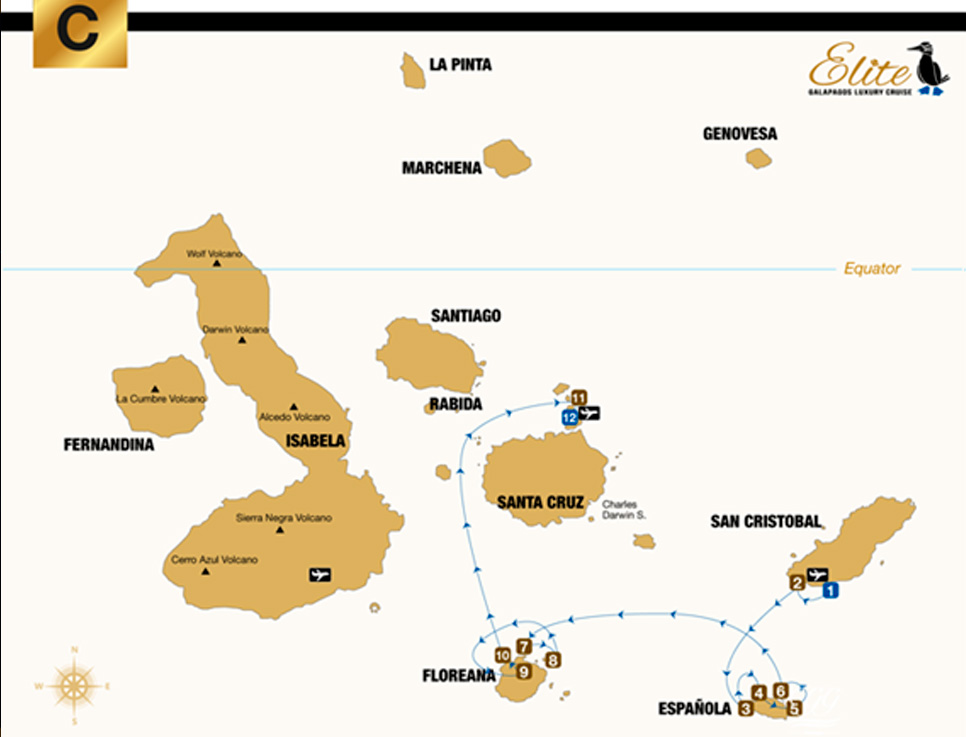
Monday AM: Cormorant Point, Floreana
Cormorant point is a visitor favorite, as it features two memorable beaches, a picturesque walk and some interesting bird and plant life. Oddly enough, there are no Galapagos Cormorants here, but the flamingos make up for it! Visitors disembark on a sandy beach, which is greenish in color because of the special sand only found here. A short walk leads to a salty lagoon where flamingos feed and nest.
An easy trail leads to white sand beach on the other side of the point, this one wide and breezy. As you walk, your guide may point out the two species of plants which are only found here: Scalesiavellosa and Lecocarpuspinaffitidus. Lucky visitors will see stingrays in the gentle surf, or even sharks swimming a little further out.
The stingrays make swimming here dangerous, but it is possible to wade in the shallows and take a stroll down the length of the beach. Look for Sally Lightfoot Crabs in rocky areas on both sides of the point.
Snorkeling at Champion Islet, considered one of the best places for snorkeling with a great variety of underwater wildlife. It is also home of Floreana Mockingbird, one of the species in danger of extinction.
Monday PM: Post Office Bay, Floreana
Long before the Galapagos Islands were a bucket-list travel destination, it was a common stop for grand wooden seafaring vessels such as whalers. The sailors placed a barrel a short way from a sheltered bay on Floreana Island and used it to drop off and receive letters from home.
Today, the yachts that serve the Galapagos are proud to continue this tradition: drop off letters and postcards in the barrel, and some other traveler will deliver them for you! Once you’ve flipped through the letters to see if there are any for your neck of the woods, you can enjoy some sun and sand on the small beach where passengers embark and disembark from the landing craft.
The Baroness’ Lookout
In the early 1930’s, Floreana Island was home to Eloise Wehrborn de Wagner-Bosquet, a beautiful young Austrian woman, and her two lovers. Calling herself “the Baroness of Galapagos,” she quickly became an international sensation. She disappeared in 1934, a case which remains unsolved to this day.
The visit to the site includes a short panga ride – look for sea life like rays and turtles. There are red mangroves along the shore: these mangroves are crucial to the island ecosystem. Once on land, a dusty trail wends steadily upwards.
The lookout point itself is a rocky hill of rugged volcanic rock, and there is indeed a good view from there, a reward for those who scramble to the top. A short walk away are the ruins of an old biological station, which were likely used in 1934 when some passing filmmakers made a short film starring the Baroness herself.